Turn a phone and a rack of clothes into a room that buys.
The boutique owner’s field guide to live selling. What it is, why the numbers are not close, which platform to start on, and how to build a schedule that pays every week.
By Binil Chacko / 20 minute read / 5 interactive tools
- ≈30%
- how often a live converts. A page does about 2%.
- $8B
- Whatnot live sales in 2025.
- 5
- interactive tools on this page, free.
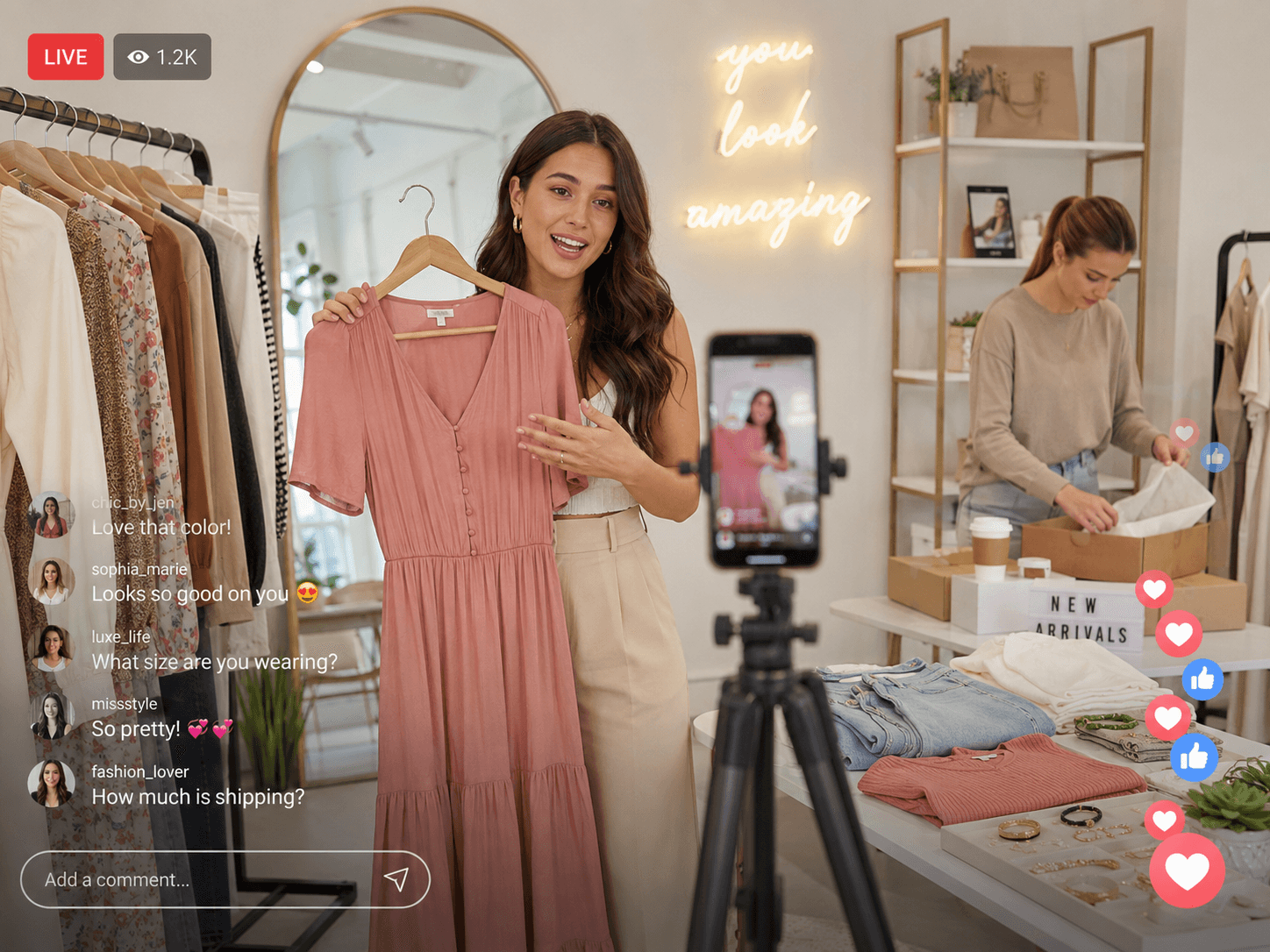
For thirty years, one host on QVC could move a warehouse of product in an hour with nothing but a phone line and a personality. Live selling is that, rebuilt on the phone in your hand, pointed at the people who already follow you. A host sells in real time over live video, viewers watch and chat and ask questions, and they buy in the moment.
A normal online store is a silent shelf. A live is a conversation. The host holds the piece up, answers your fit question by name, and the item is gone in ninety seconds if you wait. That combination, a real person plus real time plus real scarcity, is why it converts where a product page cannot. This page walks the whole thing, with five interactive tools built in. When you want the full 60-page workbook, it is a free download at the bottom.
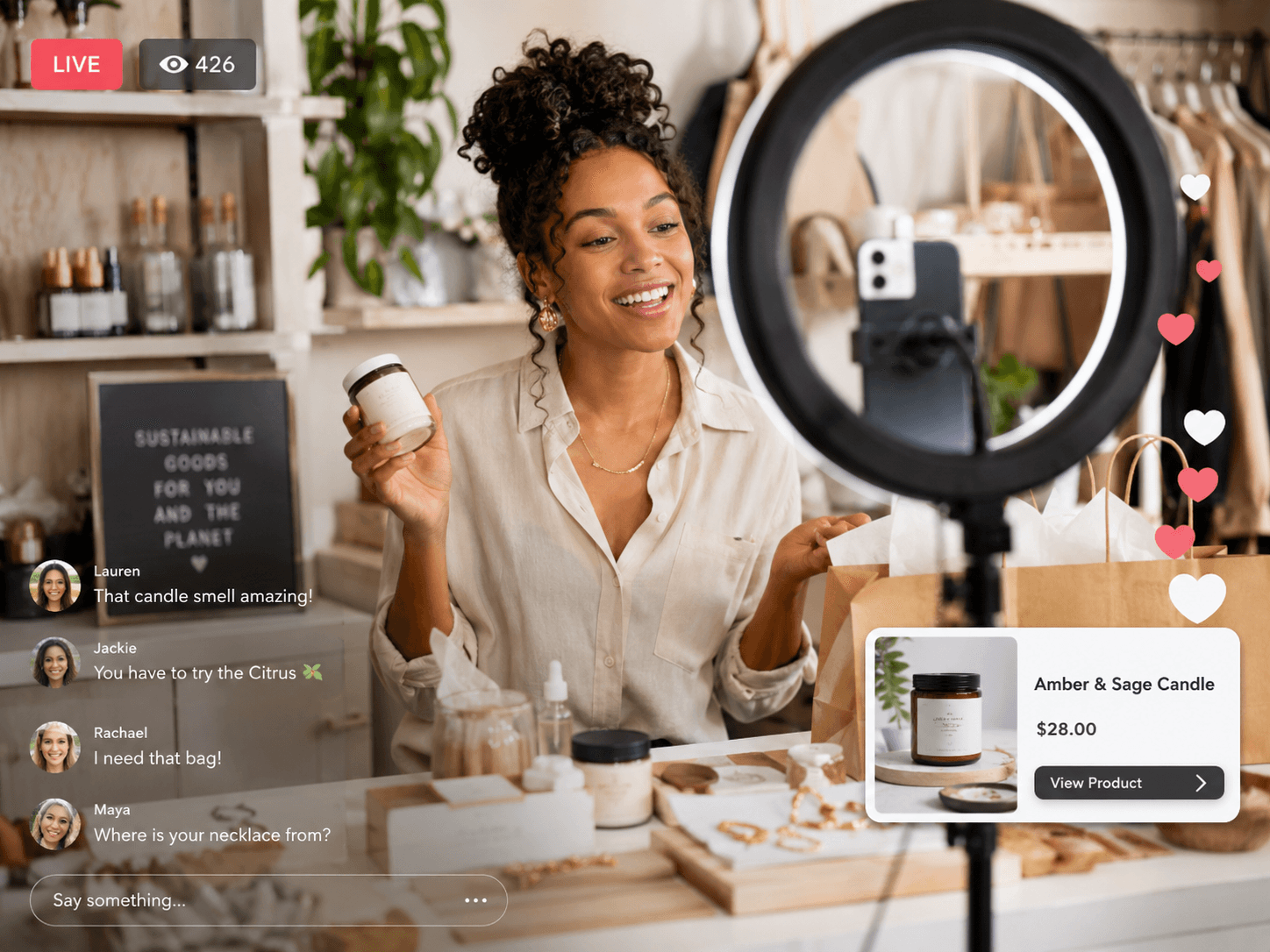
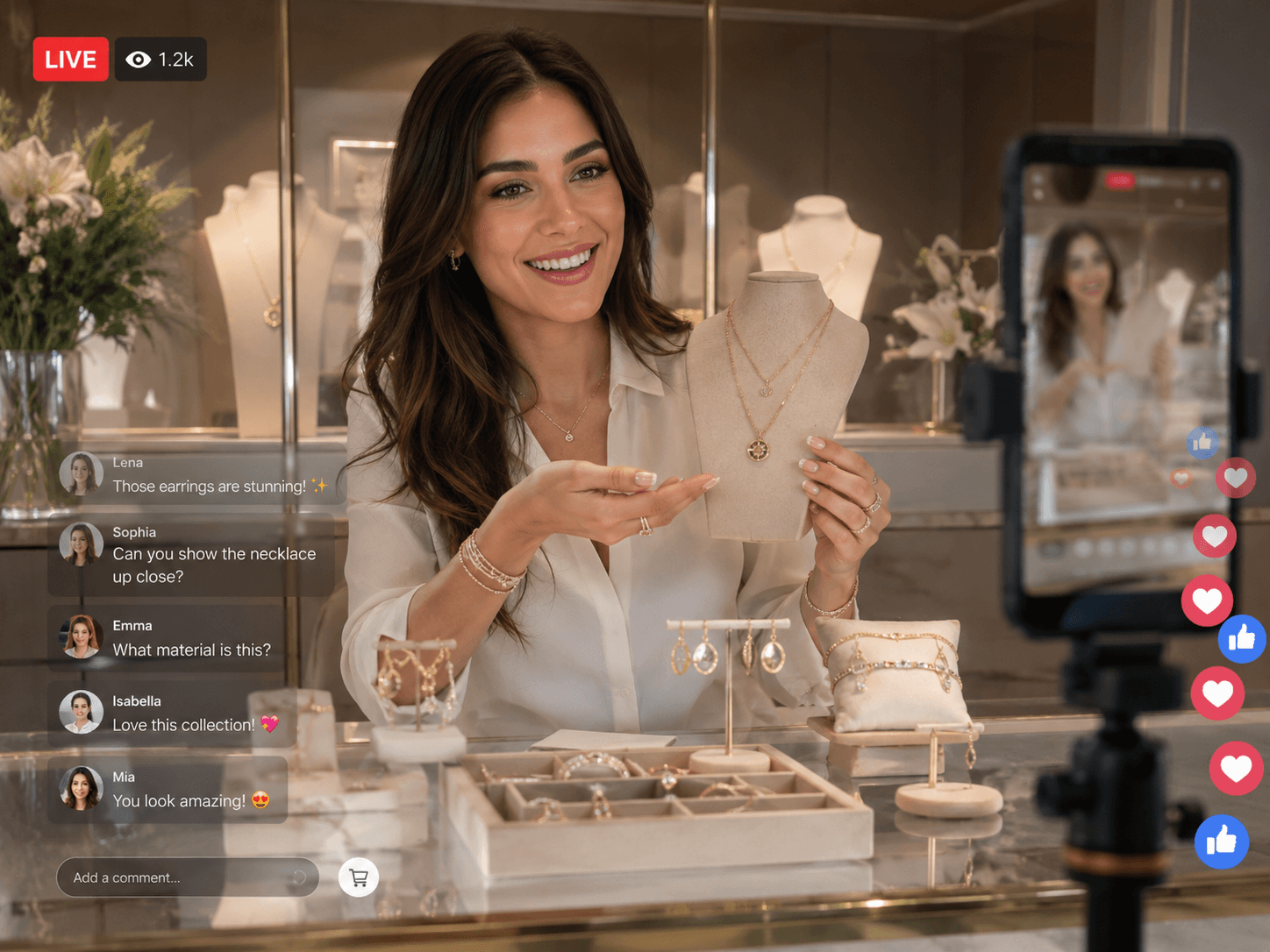
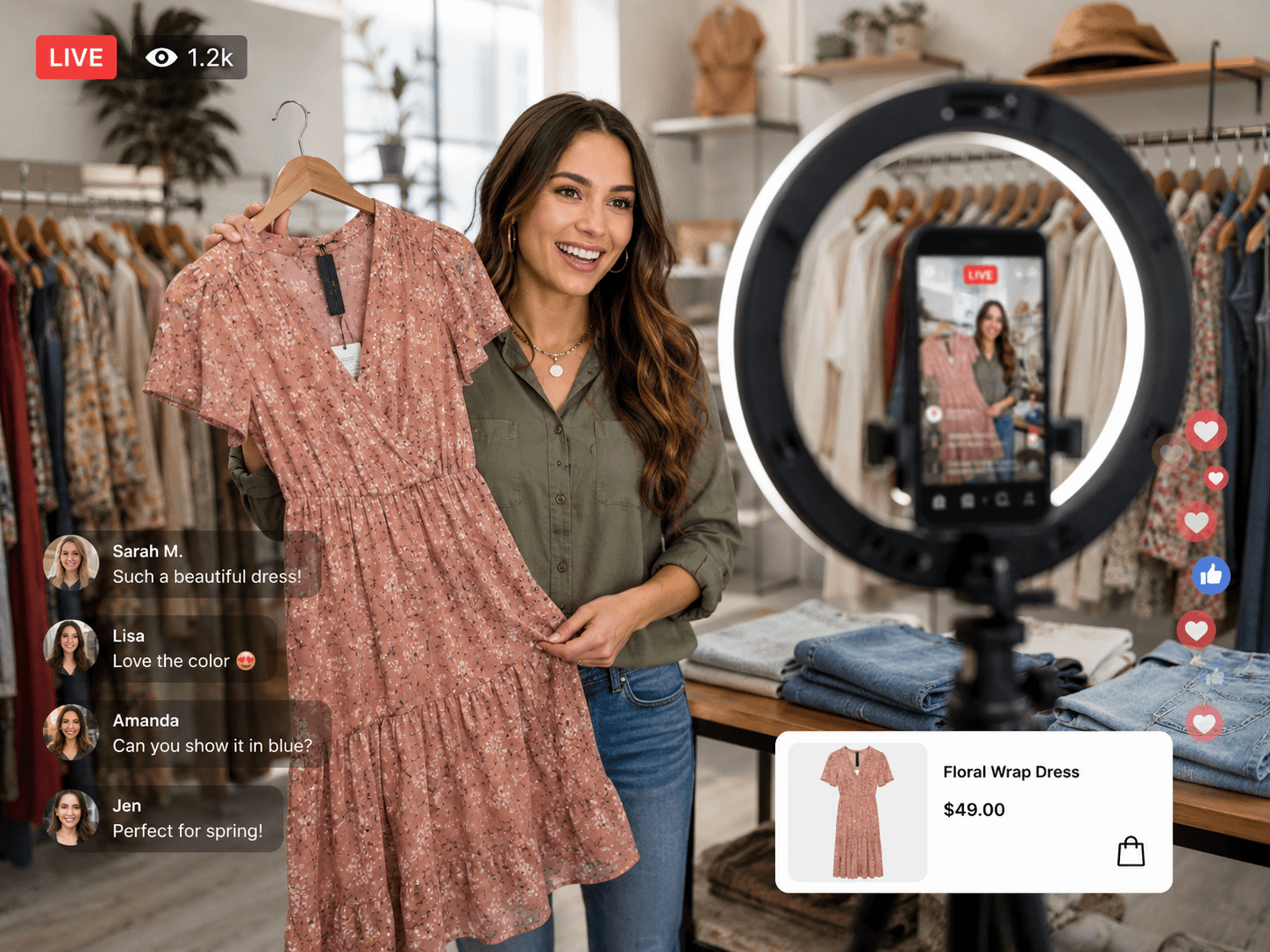
Apparel, jewelry, candles. Different boutiques, same move: a host, a phone, and a room that buys. Screens shown are illustrative.
Where it came from
Live selling is 40 years old. It just moved to your phone.
Tap any moment to open it.
HSN launches in 1982, QVC in 1986. One host, a phone line, a demo, a ticking countdown, and a running sale. TV home shopping becomes a multibillion-dollar industry on the exact mechanics you will use today. All that has changed since is the screen.
The window is open, and it will not stay open
Here is why now. Live commerce is underpriced attention in the West, the same way email was in 1997 and YouTube was in 2006. The people who start this year and stay consistent own the room before it gets crowded. You are not betting on an unproven idea. You are early to a proven one. And you do not need a big following, because a small room that trusts you outsells a huge crowd that does not.
But do not take the vibe on faith. Look at what actually separates a live from a page.
The analytics
Why a live converts where a page cannot.
A product page is a silent shelf. A live stacks scarcity, a real-time crowd, a trusted host, and a ticking clock all at once, with no pause to talk yourself out of it. That is not a vibe. It is measurable, and the gap is not close.
Conversion rate
Source: McKinsey, 2021
Time watched per visit
Source: Getstream, Firework
Engagement, comments and interaction
Source: Getstream
Average order value
Source: Live commerce benchmarks
Sales that land after the show, on the replay
Source: The Boutique Hub
Buyer retention, month over month
Source: Whatnot 2026 report
The market
$8B
Whatnot live sales in 2025
~32%
of China's online shopping is now live
~$68B
projected US live shopping by 2026
Why it works: the stack that converts
On a product page, a shopper feels one thing at a time. Maybe scarcity. Maybe a review. On a live, they feel scarcity and a crowd and a trusted host and a ticking clock and other people claiming the item, all at once, with no pause to talk themselves out of it. The persuasion is not stronger. It is stacked and un-pausable. That compression is the entire edge.
The full workbook breaks down all ten triggers, from real scarcity and social proof to the parasocial trust that builds when someone watches you every week. It also draws the honest line: use real counters and real prices, narrate the real crowd, and never fake a number. Your audience is small and repeat, so they notice. Trust is the only thing that compounds across a tight-knit room.
Pick your platform
There are a handful of real ways to sell live in 2026, and they are not interchangeable. The right one depends on one thing above all: where your audience already is. If it is on Instagram, you sell there. If you own a list, you sell on your own store. If you are starting cold, you go where the algorithm finds buyers for you. Answer three questions and get a starting point, plus the reason for it.
Live selling
Which live-selling platform should you start on?
Three questions. One honest recommendation, plus the reason you got it. No fluff.
Question 1 of 3
Where is your audience right now?
The one number that decides whether this pays
You do not have to be big to grow. You have to be consistent, and consistency multiplies. Going from once a month to once a week is a 10 to 20 times jump in earnings. Getting to 3 or 4 shows a week is 40 to 70 times more than monthly. You are not adding shows, you are compounding a relationship with a room that keeps coming back. Start at one show a week on a fixed slot you never move, then climb one rung at a time.
THE FREQUENCY LADDER
Consistency compounds. Drag to see it.
Baseline. This barely registers with the algorithm or your audience.
Rough projection at this cadence
$500 a month
Source: Whatnot 2026 State of Live Selling Report.
Read this honestly: the multiplier is what the engine produces once it is running, not a fast start. The first stretch is an on-ramp, you are building the audience and the habit before the numbers show up. Directional benchmarks, not guarantees, and a cadence you can sustain beats one you cannot.
Build the room, then never run out of things to do
The room is more crowded than it was three years ago, so you win with a plan, not a camera and a prayer. Pick a narrow lane, because specific beats broad every time. Nobody remembers a women’s clothing live, but they remember the plus-size Western boutique that goes live on Thursdays. Feed the live with short-form clips, borrow other sellers’ audiences with co-hosts and raids, and turn every viewer into a follower with a follow-to-enter giveaway.
And set honest goals so you do not quit at the worst moment. Show one is 1 to 8 viewers, maybe zero sales, and that is the standard experience. Your fifth show is better. Your tenth will surprise you. When the room is slow, pull a play.
Engagement idea bank
Never run out of ways to keep the room alive.
Stuck on what to do live? Pull a play. Try a new one every show until they are second nature.
32 plays in the bank
Hit Pull a play to see your first idea.
A few pages you will actually use tonight.
Everything above is the why and the which. The workbook is the how. Here is a real taste of what is in it.
“Hey hey, welcome in. If you’ve been waiting on the new arrivals, you’re in the exact right place, because a few of these I only have two or three of and they’re not going back up online.”
The whole first thirty minutes is scripted word for word: the open, the product beat you repeat on every item, and the close. Read it off a card until it is second nature. Nobody freezes with a script.
- 1 to 8
- viewers at show one, and zero sales is completely normal.
- $2K
- a month by month three, at two to four shows a week.
- $13K
- a month once the engine is running, at three to four shows a week.
Read these honestly. The first month or two is an on-ramp: you are building the audience and the habit, and that groundwork is most of the work. These are what the engine produces once it is running and you stay consistent, not a fast start. Directional, not a promise.
- The scripted first 30 minutes, word for word
- A minute-by-minute run of show
- A printable pre-live checklist
- A gear list that starts around $100
- A weekly KPI tracker to fill in
- The 90-day plan, phase by phase
- A script bank: openers, objection turns, closes
- All ten psychology triggers, and the honest line
Get the whole thing. Sixty pages, free.
The page above is free to read. The workbook is the takeaway you keep: the scripted first 30 minutes, the minute-by-minute run of show, the pre-live checklist, the gear list, the KPI tracker, the 90-day plan, and the script bank. Drop your email and it is yours right now.
One email, the workbook, and the occasional live-selling tip. No spam, leave anytime.
Ascend Creative. Human-AI Integration. Not random AI.
Questions people ask
Does live selling actually convert better than a normal online store?
Yes, and the gap is not close. Live commerce converts at close to 30 percent, up to ten times higher than a static product page, which converts around 2 percent (McKinsey, 2021). A live stacks scarcity, a real-time crowd, a trusted host, and a ticking clock at once, with no pause to talk yourself out of it.
How often should a boutique go live?
Frequency is the single biggest revenue lever. Whatnot’s 2026 report found that moving from monthly to weekly is a 10 to 20 times jump, and going live 3 to 4 times a week earns 40 to 70 times more than monthly. Start at one show a week on a fixed slot, then climb only when it feels easy.
Which platform should a boutique start on?
It depends on whether you already have an audience. If you are starting from scratch and want new buyers, start on Whatnot or TikTok Shop, where the algorithm finds people for you. If you already have a loyal following or VIP group, sell on Instagram and Facebook Live or your own store, where you keep the margin and the customer.
Do I need a big following to start live selling?
No. This is the myth that stops most people. Sellers start from zero followers and reach real sales in their first month by being consistent and using the platform’s own discovery. You build the audience by starting, not before you start. Show one is usually 1 to 8 viewers, and that is normal.
Is live selling a fad?
No. It is 40 years old. It started on QVC and HSN in the 1980s, exploded in China where it is now roughly a third of all online shopping, and has arrived in the US through TikTok Shop and Whatnot, which did over 8 billion dollars in live sales in 2025. US live shopping is projected near 68 billion dollars by 2026.
Want the systems behind the show built for you?
We build conversion websites for small businesses, plus the AI systems behind them, run by an operator who will tell you when not to use AI.
Start with a Website Audit and Direction for $950. Build with us within 30 days and the $950 credits back.
Ascend Creative, run by Binil Chacko. 300+ websites in 13 years.